
Long Duration Energy Storage
Hello Power.
You’ve Changed.
LAVO turns surplus solar into green hydrogen, holds it safely in patented metal hydride, and gives it back as power whenever it is needed — through the night, through the week, through the season.
- 10,000
- charge cycles
- 30 bar
- low-pressure, non-flammable storage
- 100%
- recyclable hydride alloy
- Power-to-X
- renewable energy conversion, storage and dispatchable energy
About LAVO
Headquartered in Sydney, Australia, and spun out of the University of New South Wales (UNSW), LAVO is a global green tech pioneer dedicated to transforming how society stores and uses energy. Since 2020, we have advanced clean energy through two core verticals — LAVO HESS (integrated hydrogen storage and power generation) and solid-state hydrogen storage — delivering safe, next-generation solutions worldwide, including our expansion into Japan.
Lithium covers the hours. Hydrogen covers the days.
Short-duration batteries and long-duration hydrogen are not rivals — deployed together they cover the whole duration curve. Lithium answers the evening peak and the millisecond response. LAVO answers the still week, the remote site and the season. The technology it replaces is the diesel generator.
-
Complementary, not competing
Lithium for hours, hydrogen for days and weeks. One system, one complete answer, rather than a choice between two partial ones.
-
The benchmark is diesel
At comparable system efficiency, LAVO is safer, cleaner, and more economical across a long cycle — with no fuel run, no fumes and no theft risk.
-
Critical loads cannot wait
Telecom towers, island grids and industrial sites need supply that holds when the weather does not.
Technology
How the LAVO HESS works
LAVO HESS converts renewable electricity into hydrogen for long-duration energy storage, then converts it back into electricity when power is needed.
- 01
Renewable power in
Surplus electricity from rooftop solar, utility-scale renewables or the grid powers the system. Energy that might otherwise be curtailed can be captured and stored for later use.
- 02
Hydrogen production
An integrated water treatment system supplies purified water to the electrolyser, which uses electricity to split water into hydrogen and oxygen. The hydrogen is conditioned for storage, while oxygen is safely discharged.
- 03
Solid-state hydrogen storage
Hydrogen is absorbed into LAVO’s metal hydride alloy and stored in solid-state form within purpose-designed vessels. Operating at relatively low hydrogen pressure, typically around 30 bar, the system provides a stable, compact solution for storing energy over extended periods with minimal self-discharge.
- 04
Power on demand
When electricity is required, hydrogen is released from the metal hydride storage and supplied to the fuel cell. The fuel cell combines hydrogen with oxygen from ambient air to generate electricity, with water and heat as the primary by-products.
- 05
Intelligent hybrid response
A lithium-ion buffer battery, power electronics and intelligent energy management system work together with the hydrogen system. The battery supports rapid response, transient loads and system start-up, while hydrogen provides the larger-capacity, long-duration energy reserve.
Applications
Built for the loads that cannot go down
-
Telecommunications towers
Thousands of remote towers still run on diesel. Hydrogen storage removes the fuel run, the fumes and the theft risk that comes with a tank on site.
Read the case study -
Off-grid and island communities
Where fuel arrives by barge, every litre is expensive and every delivery is a risk. Solar plus long-duration hydrogen breaks that dependency.
Read the case study -
Commercial and industrial backup
Backup and emergency power for plants, hospitals and facilities with real resilience obligations and real emissions targets.
Read the case study -
Data centres
Decarbonise standby power and shave peaks without a diesel generator waiting in the yard.
Read the case study -
Homes — where LAVO began
The original LAVO System stores over 40 kWh, enough to carry an average Australian home for two days without further sun. It is where the technology proved itself.
Read the case study
Deployments
Where the system has run
LAVO HESS units have been deployed across Australia and internationally — on telecom infrastructure, at solar generation sites, in emergency backup roles and in residential trials. Each marker is a region where the system has operated.
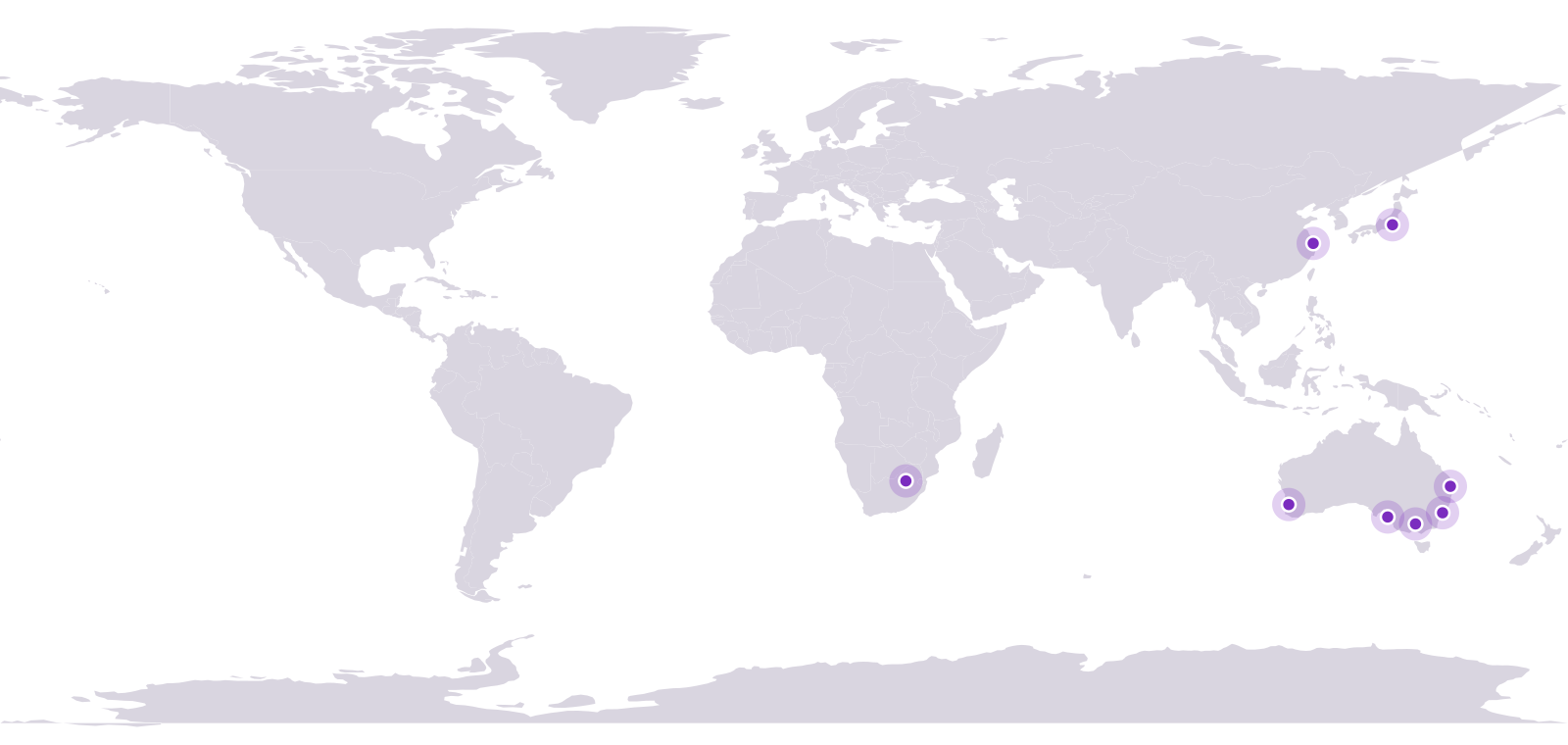
Markers indicate deployment regions, not individual sites.
See the application scenariosNews
Latest from LAVO
Australian company LAVO Renewables, an Australian developer of hydrogen energy storage system, has established a subsidiary in Japan
JETRO reports that LAVO Renewables has established a subsidiary in Japan.
Supporting the next generation of hydrogen innovators
LAVO sponsored a team of students from St Aloysius' College to compete in the Hydrogen Grand Prix in Germany.
Australia: LAVO’s Hydrogen Batteries Are Leading the Renewable Energy Transition
FuelCellsWorks reports on LAVO’s metal hydride hydrogen batteries and their role in Australia’s renewable energy transition.
Contact
What needs to
keep running?
From data centres and telecom networks to island grids and industrial sites, tell us what needs to stay powered. We’ll assess where long-duration hydrogen storage fits, and where it doesn’t.